Tuesday, 30 April 2013

Must & Mustn't: Activites


To practise must and mustn't, take a look at this presentation, and after, do the activities below.


Activities:

Saturday, 27 April 2013

Windows Live Movie Maker Tutorial

Here you have some tutorials on how to use the Windows Live Movie Maker.


Power Point Presentations Tutorial

To create your final project for your English class, you should know how to do a Power Point presentation.

GFC LearnFree Organization provides you with a clear, wide tutorial to learn how to do a good slide show.

But if you haven't got time enough, have an eye to this video tutorial:


Thursday, 25 April 2013

Present Perfect Simple


The present perfect simple expresses an action that is still going on or that stopped recently, but has an influence on the present. It puts emphasis on the result.

Form of Present Perfect


Positive
Negative
Question
I / you / we / they
I have spoken.
I have not spoken.
Have I spoken?
he / she / it
He has spoken.
He has not spoken.
Has he spoken?
For irregular verbs, use the participle form. For regular verbs, just add ed.

Exceptions in Spelling when Adding ed


Exceptions in spelling when adding ed
Example
after a final e only add d
love – loved
final consonant after a short, stressed vowel
or l as final consonant after a vowel is doubled
admit – admitted
travel – travelled
final y after a consonant becomes i
hurry – hurried

Use of Present Perfect

  • puts emphasis on the result
Example: She has written five letters.
  • action that is still going on
Example: School has not started yet.
  • action that stopped recently
Example: She has cooked dinner.
  • finished action that has an influence on the present
Example: I have lost my key.
  • action that has taken place once, never or several times before the moment of speaking
Example: I have never been to Australia.

Signal Words of Present Perfect

already, ever, just, never, not yet, so far, till now, up to now


Activities

Wednesday, 24 April 2013

Can & Can't


Learn how to use can and can't with these funny pumpkins:


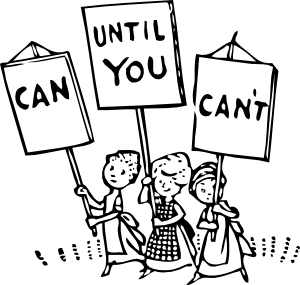
Can Until You Can T Clip Art

Can is an auxiliary verb that we use to:
  • Talk about possibility and ability.
  • Make requests.
  • Ask for or give permission.
The structure of can:
  • subject + can + main verb

The main verb is always the infinitive without "to".

subject
auxiliary verb
main verb

+
I
can
read
a book.
-
He
can't /cannot
read
a book.
?
Can
you
read
a book?

  • Can is invariable. There is only one form of can.
  • The main verb is the infinitive without "to".

Activities:
  • From The Yellow Pencil, a page with listenings, rules and exercises.
  • English Exercises offers you three different activities: 12 & 3.
  • Some exercises from Better English  12 & 3.

Wednesday, 17 April 2013

Sports Vocabulary


This lesson is all about sports. Here you will learn the words basketball, baseball, volleyball, ski, swimming, marathon, tennis, golf, cycling, and badminton in English, so you can meet up with your English friends for a game in their language.:


Extreme Sports


Originally, adult sports involving a high level of danger and adrenaline that would not appeal to most people but attract a daring few: things like skydiving, bungee jumping, rock climbing, ice climbing, technical mountaineering, hang gliding. It generally did not include sports which were "extreme" in their early years but since became mainstream (e.g., downhill skiing or scuba diving), nor did it include children's and teenager's activities like BMX or skateboarding. Extreme sports originally meant adult and non-mainstream. Later (from the late 1990s on) the meaning changed to become synonymous with non-dangerous kiddie sports and the definition has more to do with age (and with marketing energy drinks, Mountain Dew, baggy pants, and punk and thrash music), much to the chagrin of older folks involved in dangerous sports who now would rather the term would go away.


Here you have links to different extreme sports:


For more information see the Wikipedia.

History of Ancient Olympic Games


The Olympic Games begun at Olympia in Greece in 776 BC. The Greek calendar was based on the Olympiad, the four-year period between games. The games were staged in the wooded valley of Olympia in Elis. Here the Greeks erected statues and built temples in a grove dedicated to Zeus, supreme among the gods. The greatest shrine was an ivory and gold statue of Zeus. Created by the sculptor Phidias, it was considered one of the Seven Wonders of the World. Scholars have speculated that the games in 776 BC were not the first games, but rather the first games held after they were organized into festivals held every four years as a result of a peace agreement between the city-states of Elis and Pisa. The Eleans traced the founding of the Olympic games to their King Iphitos, who was told by the Delphi Oracle to plant the olive tree from which the victors' wreaths were made.


According to Hippias of Elis, who compiled a list of Olympic victors c.400 BC, at first the only Olympic event was a 200-yard dash, called a stadium. This was the only event until 724 BC, when a two-stadia race was added. Two years later the 24-stadia event began, and in 708 the pentathlon was added and wrestling became part of the games. This pentathlon, a five-event match consisted of running, wrestling, leaping, throwing the discus, and hurling the javelin. In time boxing, a chariot race, and other events were included.


The victors of these early games were crowned with wreaths from a sacred olive tree that grew behind the temple of Zeus. According to tradition this tree was planted by Hercules (Heracles), founder of the games. The winners marched around the grove to the accompaniment of a flute while admirers chanted songs written by a prominent poet.

The Olympic Games were held without interruptions in ancient Greece. The games were even held in 480 BC during the Persian Wars, and coincided with the Battle of Thermopylae. Although the Olympic games were never suspended, the games of 364 BC were not considered Olympic since the Arkadians had captured the sanctuary and reorganized the games.


After the Battle of Chaironeia in 338 BC, Philip of Makedon and his son Alexander gained control over the Greek city-states. They erected the Philippeion (a family memorial) in the sanctuary, and held political meetings at Olympia during each Olympiad. In 146 BC, the Romans gained control of Greece and, therefore, of the Olympic games. In 85 BC, the Roman general Sulla plundered the sanctuary to finance his campaign against Mithridates. Sulla also moved the 175th Olympiad (80 BC) to Rome.


The games were held every four years from 776 BC to 393 AD, when they were abolished by the Christian Byzantine Emperor Theodosius I. The ancient Olympic Games lasted for 1170 years.
The successful campaign to revive the Olympics was started in France by Baron Pierre de Coubertin late in the 19th century. The first of the modern Summer Games opened on Sunday, March 24, 1896, in Athens, Greece. The first race was won by an American college student named James Connolly.